
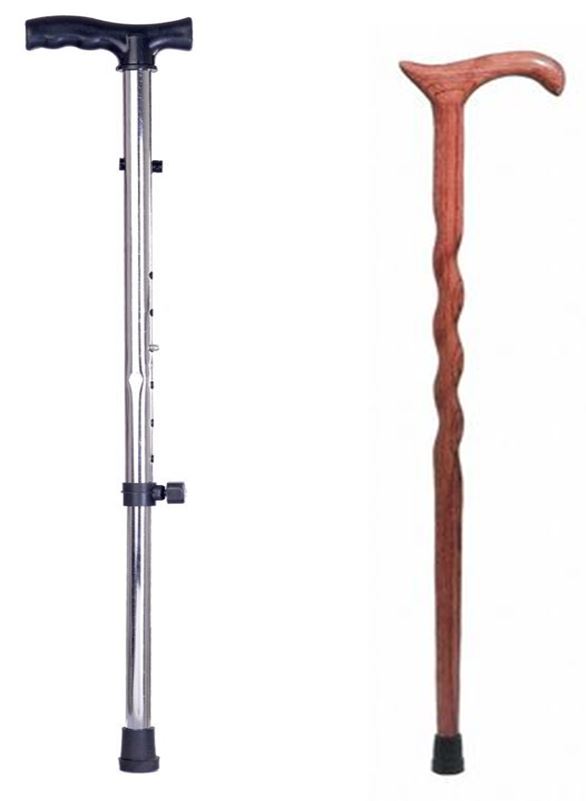

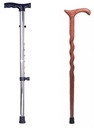
WALKING STICK, single-base, adult, adjustable

Valid Article

 OC subscriptions: included in supply or field order tools (e.g. UniField)
|
|
 SC subscriptions: included in supply or field tools
|
|
 OC validations: approved for procurement and use by an OC for international or local orders specifying context and activity in Medical Standard Lists (MSL)
|
|
WALKING STICK, single base
Definition
A rod, typically made of wood or metal, with one leg/foot and a handgrip or curved handle and without forearm support used to assist a person with a disability to maintain their balance and support their weight while walking. It may be of fixed or adjustable length, and collapsible or non-collapsible.
Specifications
Canes can help redistribute weight from a lower leg that is weak or painful, improve stability by increasing the base of support, and provide tactile information about the ground to improve balance.
The basic cane has four parts. These parts vary depending on the design of the cane and the needs of the user.
- The handle of a cane is extremely important to the user. Many different styles exist. Ergonomically shaped handles have become increasingly common for canes intended for medical use, both increasing the comfort of the grip for the user and better transmitting the load from the user's hand and arm into the shaft.
- The collar of a cane may be only a decorative addition, or may form the structural interface between shaft and handle.
- The shaft of the cane transmits the load from the handle to the ferrule
- The ferrule is the tip of a cane; it provides traction and added support when the cane is used at an angle. Many kinds of ferrules exist, but most common is a simple, ridged rubber stopper.

Technical specifications
- Handle: ergonomic
- Shaft:
- adjustable height 80- 95 cm
- made of carbon fiber polymer, metal, composites
- Ferrule:
- rubber
- ID Ø +/- 19mm (corresponding to the outer Ø of the shaft)
- non-slip
Instructions for use
Precautions for Use
How to measure for a Walking Stick
It is very important to have the walking stick at the correct height for you otherwise the support from the walking stick will not be appropriate. Fitting a walking stick correctly is not determined by how tall a person is but by the distance between your hand and the ground.
The walking stick user should stand upright, in the type of shoes they normally wear, with their arms naturally down by their sides. Another person should turn the walking stick upside down, so that the handle is resting on the floor. Then the person should position the walking stick next to the user, and measure the distance between wrist bone and the floor – this is the height of stick required.
MSF requirements
The simple design and sturdy walking stick is suitable for a variety of users who need extra support while walking.